Bus Lanes and Zig Zag Lines: Singapore Rules Explained
Bus lanes and zig zag lines are two of the most visually recognisable road markings in Singapore, and both come up regularly in the BTT. The rules are simple once you understand the logic behind them, but the exact timings and exceptions are exactly the kind of detail the exam likes to test.
The Three Types of Bus Lanes
According to LTA, Singapore operates three categories of bus lane, each with its own signage and operating hours.
Full Day Bus Lanes
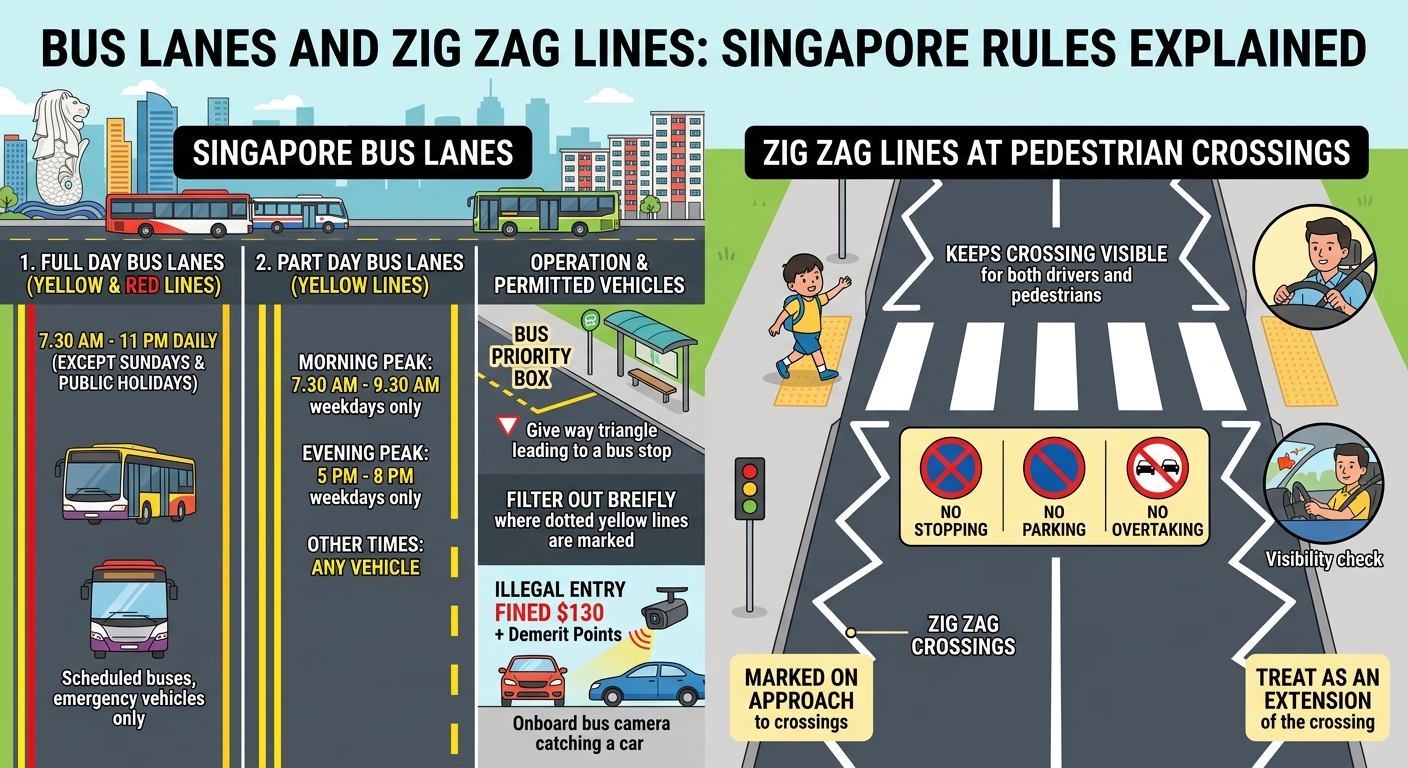
Found mainly in the city centre, these lanes are marked with a continuous yellow and red line and operate from 7.30am to 11pm every day, except Sundays and public holidays. During these hours, only buses and a small list of permitted vehicles may use the lane.
Need Help or Have Test Tips to Share?
Our official forum is now open! Ask questions about tricky BTT/FTT rules, share your driving test experiences, or help fellow learners pass on their first try.
Part Day (Normal) Bus Lanes
Marked with a continuous yellow line, these lanes only restrict traffic during weekday peak periods, typically covering the morning and evening rush hours. Outside those windows, any vehicle can use the lane like a normal traffic lane.
Bus Only Lanes
As the name suggests, these lanes are reserved exclusively for buses, with no time based exceptions for general traffic.
Who Is Allowed to Use a Bus Lane
During operating hours, using a bus lane is illegal for all vehicles except a specific list of exceptions, which includes scheduled public buses and certain other permitted vehicle types. Non scheduled buses, such as school buses and factory buses, are allowed to drive in the bus lane, but they are not permitted to stop, pick up, or drop off passengers while in it.
You are also allowed to briefly enter a bus lane where it is marked with a broken or dotted yellow line, which signals a permitted turning point into a side road, or to filter out of the bus lane when you need to turn.
Penalties for Bus Lane Offences
Driving or parking in a bus lane during restricted hours carries a composition fine, along with demerit points added to your licence. Enforcement is no longer limited to traffic wardens on the ground; buses fitted with onboard cameras and fixed enforcement cameras now catch a significant share of bus lane violations automatically.
The Bus Priority Box
Closely related to bus lanes, a Bus Priority Box is marked with white lettering reading "BUS" and a triangle symbol, usually just ahead of a bus stop. When you see the Give Way triangle leading up to it, slow down and stop before the give way line if needed, giving way to any bus entering or exiting the yellow box. Do not stop or wait inside the Bus Priority Box itself.
What Zig Zag Lines Actually Mean
Zig zag lines are the white or yellow zigzag markings you see painted on the road on the approach to a pedestrian or zebra crossing. Their purpose is straightforward: they keep the area near the crossing clear of parked or stopped vehicles, so that both drivers and pedestrians have a clear line of sight to each other.
Within a zig zag zone, you should not stop, park, or overtake another vehicle. Treat the zone as an extension of the crossing itself. A car parked or stopped on the zig zag lines can hide a pedestrian, particularly a child, from an approaching driver's view until it is too late to react safely.
Why the BTT Tests This So Often
Bus lane and zig zag questions tend to combine two skills at once: recognising a road marking correctly, and recalling the specific rule tied to it, whether that is a time window, a distance, or an outright prohibition. Mixing up a full day bus lane with a part day one, or assuming zig zag lines only restrict parking and not overtaking, are both common ways candidates lose marks here.
Key Takeaway
Check the sign for exact operating hours before assuming a bus lane is free to use, since full day and part day lanes look almost identical without it. And treat every set of zig zag lines the same way regardless of how quiet the road looks: no stopping, no parking, no overtaking.
Road safety rules around alcohol are also under review this year. If you have not seen it yet, our latest article on Singapore's new drink driving limits covers exactly what changed and what it means for your BTT prep.