Singapore's New Drink Driving Limits 2026: What's Changing
If you studied for your BTT using the old alcohol limits, this is worth reading carefully. Singapore is preparing one of the biggest changes to its road safety laws in years, and once passed it will directly affect the numbers many learners memorised for the Alcohol and Road Safety section of the theory test.
The Proposed Limits, In Plain Numbers
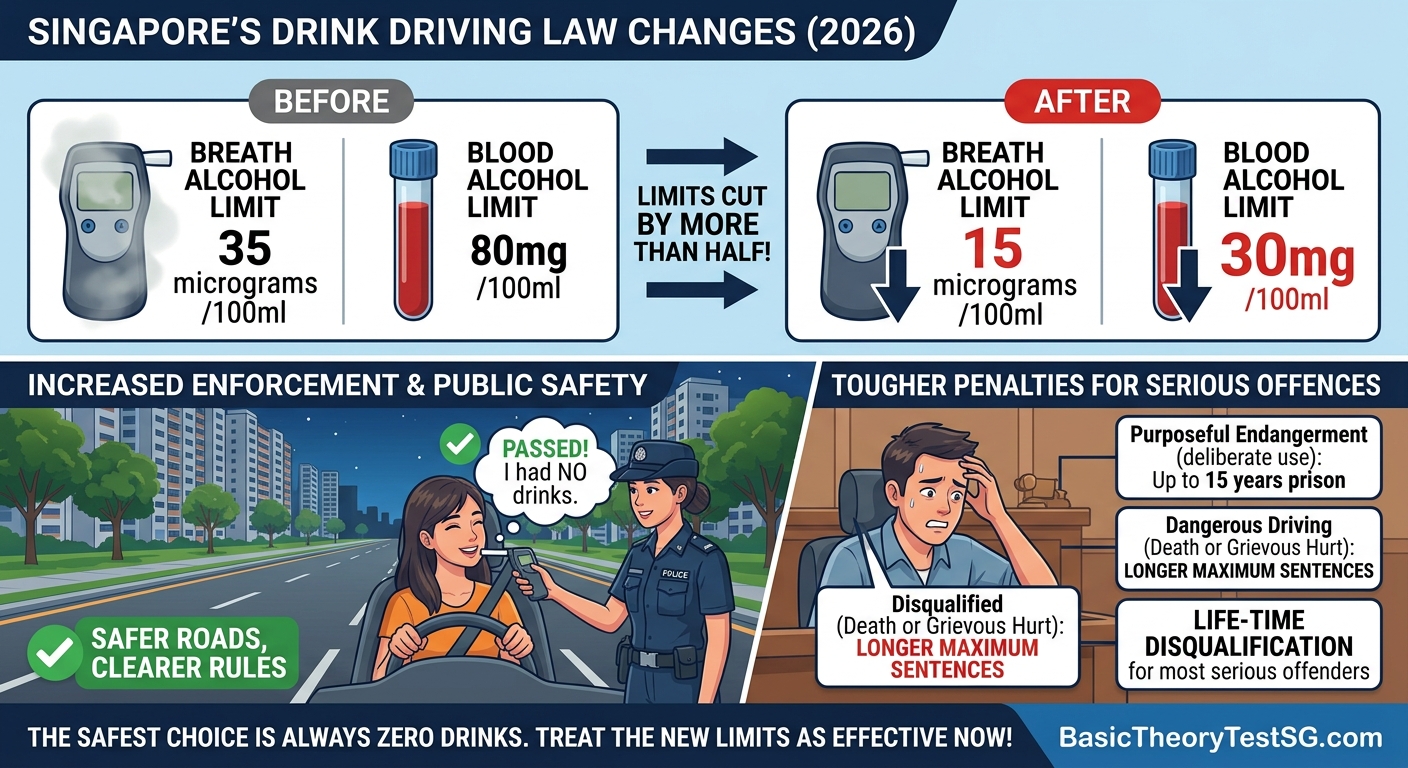
The proposed breath alcohol limit would drop from 35 micrograms per 100ml to just 15 micrograms per 100ml. The proposed blood alcohol limit would fall from 80mg per 100ml to 30mg per 100ml. Both figures represent a cut of more than half, moving Singapore's threshold much closer to countries like Japan, South Korea, and Taiwan, which have long taken a stricter line on drink driving.
The practical effect, once in force, is simple: amounts of alcohol that currently keep a driver under the legal limit could put them over it under the new rules. The Ministry of Home Affairs has been explicit that there is no genuinely "safe" number of drinks before driving, since alcohol affects each person differently depending on weight, tolerance, and how much food was eaten beforehand.
Need Help or Have Test Tips to Share?
Our official forum is now open! Ask questions about tricky BTT/FTT rules, share your driving test experiences, or help fellow learners pass on their first try.
Why the Limit Is Being Lowered
Two specific problems pushed lawmakers to act. First, drink driving cases sometimes relied on a breath test administered well after a driver was actually pulled over, by which point their blood alcohol level had already started dropping, undermining the strength of the evidence. A lower limit narrows that gap. Second, the change sits alongside a broader tightening of road safety law, proposed after traffic deaths rose by roughly 24 percent and traffic violations climbed around 38 percent between 2021 and 2025.
It's Not Just About Alcohol
The same Bill also proposes raising the stakes for other serious offences. A new charge of purposeful endangerment would cover drivers who deliberately use a vehicle to cause harm, carrying penalties of up to 15 years in prison. Dangerous driving causing death or grievous hurt would carry longer maximum sentences than today, and most offenders convicted under the tougher provisions would face a lifetime driving disqualification rather than a fixed ban with an expiry date.
What This Means for Your BTT Prep
If your study materials, including this site's own Alcohol and Road Safety category, list the current limits of 35 micrograms breath or 80mg blood, those are still the correct figures to know for your test today. Our Alcohol & Road Safety Rules guide covers the broader principles that will keep applying regardless of the exact numbers, judgement around drinking and driving, response times, and enforcement. We're watching this Bill closely and will update our question bank as soon as the new limits are actually passed into law, so it's worth checking back rather than assuming a figure you see quoted elsewhere is already current.
When Will This Actually Take Effect
As of this writing, the Bill has only passed First Reading in Parliament. It still needs to go through Second and Third Readings and be passed before it becomes law, and Singapore's laws typically only come into force once the government announces a formal implementation date after that. No such date has been set yet. Drivers should not assume the new limits are legally binding today, but treating them as the direction the law is clearly heading is a sensible way to plan ahead, especially since the safest amount of alcohol before driving was always zero regardless of where the legal line sits.
Key Takeaways
- Proposed breath alcohol limit: down from 35 to 15 micrograms per 100ml, not yet in force.
- Proposed blood alcohol limit: down from 80mg to 30mg per 100ml, not yet in force.
- A proposed purposeful endangerment offence would carry up to 15 years in prison.
- Most serious offenders would face lifetime driving disqualification, not a fixed ban, if the Bill passes as introduced.
- The Bill has only passed First Reading, it is not yet law and has no confirmed start date.
The safest number of drinks before driving hasn't really changed with this Bill, it was always zero if you wanted a genuine margin of safety. What's set to change is how little room for error the legal limit will leave, and how seriously the penalties will treat getting it wrong.