Singapore Is Removing ERP Gantries: What the New Blue Road Markings Mean
If you learned to drive by watching for the gantry ahead and bracing for a beep, that habit is about to become outdated. Singapore's ERP system is changing in a way that affects how you'll actually read the road, not just how you're charged.
Why the Gantries Are Disappearing
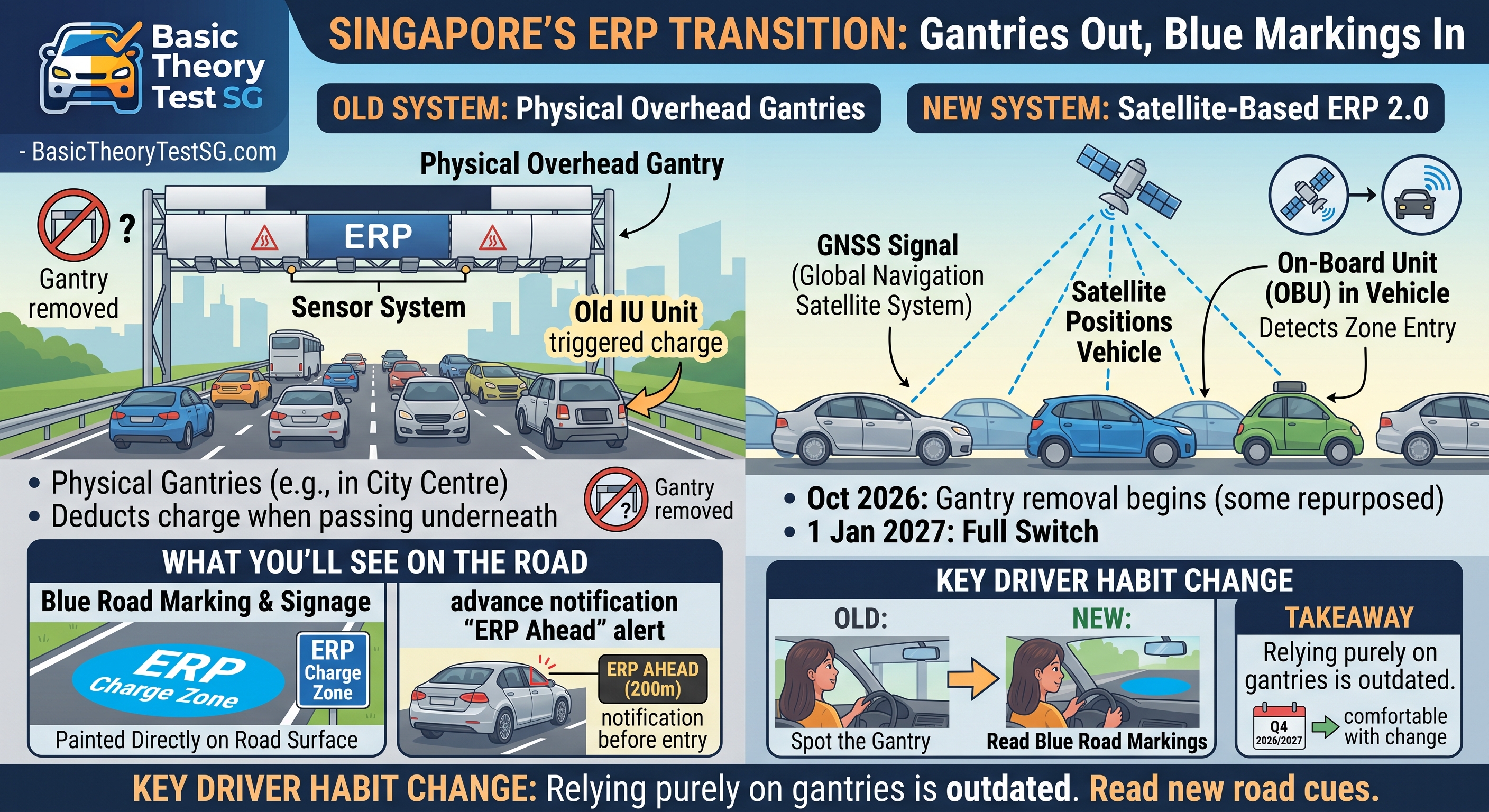
The current ERP system has relied on physical overhead gantries since 1998, each one fitted with sensors that detect a vehicle passing underneath and deduct the relevant charge. ERP 2.0 replaces that entirely with Global Navigation Satellite System (GNSS) technology built into an On-Board Unit fitted in the vehicle itself. Instead of a gantry triggering a charge, the system uses satellite positioning to work out when a vehicle has entered a priced zone, no overhead structure required.
More than 98 percent of eligible Singapore registered vehicles already have the On-Board Unit installed, since fitting one has been mandatory ahead of the full switch. If your vehicle doesn't have one yet, it will need to before the old system is switched off.
Need Help or Have Test Tips to Share?
Our official forum is now open! Ask questions about tricky BTT/FTT rules, share your driving test experiences, or help fellow learners pass on their first try.
What You'll Actually See on the Road
Blue Road Markings and Signage
Since there's no gantry to look for anymore, the system needs another way to tell drivers where charging zones begin. A blue oval symbol is painted directly on the road surface, paired with "ERP Charge Zone" signage, marking exactly where a priced stretch starts. These began appearing progressively from October, starting with gantry locations that are no longer operational, before extending to the still active ones once gantry based charging stops at the end of the year.
The "ERP Ahead" Alert
Drivers with the On-Board Unit installed also get an advance notification, similar to an "ERP Ahead" alert, roughly 200 metres before reaching a charging location on expressways, giving a bit of warning before the zone itself rather than relying purely on spotting the marking in time.
What Happens to the Old Gantries
All 95 physical gantries across the island will eventually come down, but not all at once. Gantries that are already non-operational are being removed first, starting from October, while gantries still actively charging under the current system stay in place until gantry based ERP charging formally ends. Interestingly, some of the gantry frames won't disappear completely, a number are expected to be repurposed to hold roadside equipment that supports the new satellite based system, rather than being torn down entirely.
How This Connects to What You Already Know
If you've read our expressway driving guide, you'll already know the basics of how ERP pricing works day to day. What's changing isn't the underlying principle, roads still get priced during busier periods, it's the physical cue you use to recognise a charging zone. Where you once watched for the gantry structure itself, the new habit is spotting the blue road marking and signage instead.
Beyond Charging: Other Uses for the System
Missed or incorrect charges under the new system are being treated as an administrative matter rather than a criminal offence, a deliberate shift from how enforcement worked under the old gantry system. The satellite based system is also expected to be used for other purposes down the line, including detecting deregistered vehicles still on the road and enforcing against illegal cross border taxi activity. Authorities have also indicated the same technology could eventually help enforce speeding offences, though that capability is still being studied rather than active today.
Key Takeaway
If you're learning to drive now, you're catching this transition mid-stream, you'll likely encounter both the old gantry habit and the new road marking system depending on when and where you're driving over the next year. Getting comfortable reading the new blue markings early is worth doing deliberately, since relying purely on spotting an overhead gantry is a habit that's actively being phased out from under you. The core judgement the BTT tests, reading what the road is telling you and reacting appropriately, doesn't change here. What's changing is where that information actually appears.
Enforcement on Singapore's roads is changing in more ways than one this year. If you have not seen it yet, our latest article on Singapore's new traffic enforcement cameras covers the other side of that shift, how violations like illegal U-turns and double white line crossings are now being caught automatically.